The Training Care Home Staff Receive And How It Impacts Your Loved One
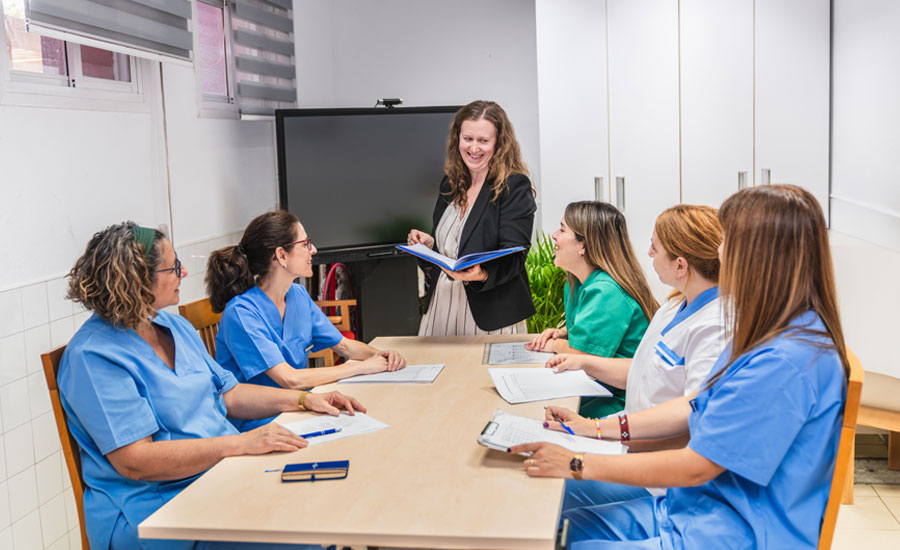
Starting the search for a care home raises many questions.
Is the home safe? Will the staff be kind? And will your loved one be treated with dignity?
The answers to these questions depend heavily on the care team’s level of training.
Most families never ask about staff qualifications during a visit. But understanding what good training looks like and what it means for your loved one’s daily experience, is one of the most practical things you can do when comparing homes. So keep reading as we discuss care home staff training and why it’s important.
What Are the Responsibilities of a Care Home Manager?
A manager of a care home is legally accountable for the standard of care delivered in the home. Their responsibilities cover recruiting and training staff, maintaining CQC compliance, overseeing care plans, managing safeguarding procedures, handling complaints and ensuring medication is administered safely and accurately. In short, every system that protects your loved one’s well-being is the manager’s responsibility to implement and maintain.
The Training Every Care Staff Member Is Required to Have
Care homes in England are required under the Health and Social Care Act 2008 to ensure staff are competent, qualified and properly supervised.
In practice, this means every care assistant should complete the Care Certificate, a 15-standard framework covering areas such as duty of care, privacy and dignity, safeguarding, infection control and basic life support.
The Care Certificate is the starting point, but a home that treats it as a box-ticking exercise is worth scrutinising.
During your search for the best care home, it’s a good idea to ask the manager how their training is built on after induction and what continuing professional development looks like for their team. Some of these include:
Dementia Training
With an estimated 70% of care home residents living with some form of dementia, so specialist training in this area is essential.
Care staff working with residents who have dementia need to understand how the condition progresses, how it affects communication and behaviour and respond in ways that reduce distress rather than escalate it.
Good dementia training also teaches techniques like validation therapy, which involves acknowledging a resident’s emotional reality rather than correcting them and person-centred approaches that treat your loved one as an individual with a history, so they don’t feel like they’re just a set of symptoms to manage. Do staff hold a qualification such as the City & Guilds Dementia Care Award? Or does the home deliver accredited dementia training in-house?
Safeguarding
Every member of care staff in the home, from care assistants to the manager, must complete safeguarding training.
They must be able to recognise signs of abuse or neglect, understand the duty to report concerns and know exactly what steps to take when something does not look right.
This training matters directly to your loved one because it means the people caring for them are equipped to identify when something is wrong, even when a resident cannot communicate it themselves. A home with robust safeguarding training has staff who know the difference between an accidental injury and a pattern that needs reporting.
Medication Training
Only staff who have completed accredited medication training are permitted to administer medication to residents, including understanding dosage, recognising side effects, following controlled drug procedures and completing accurate medication administration records.
Errors in medication can have serious consequences for older residents, particularly those on multiple prescriptions. That’s why it’s important to question how medication competency is assessed and how often staff are retrained or audited.
Activity Coordinators
Activity coordinators are sometimes overlooked in conversations about training, but they actually make a significant contribution to a resident’s mental and emotional well-being. A well-trained activity coordinator understands how to create meaningful activities for residents living with dementia, physical limitations or sensory impairments instead of just defaulting to bingo and sing-alongs.
Look for homes that have activity coordinators who are qualified, such as the NCFE Level 2 Award in Activity Provision in Social Care. Ask what a typical week of activities looks like and how carers adapt activities for residents who cannot participate in group settings.
The Manager’s Role in Ongoing Training
Training shouldn’t be a one-off.
Staff should receive regular refresher training, supervision sessions and annual appraisals that identify development needs. The manager is responsible for keeping training records up to date and addressing gaps before they become risks.
When you visit a home, ask how they monitor staff competency on an ongoing basis. If they can point to a specific system, a supervision schedule or recent training outcomes, that should be reassuring.
Ask the Questions That Actually Matter
Most care home visits allow for a tour, a chat over tea or a glossy brochure. The families who leave with the clearest information are the ones who ask directly about training, qualifications and how the manager maintains consistent standards across the whole team.
Your loved one’s safety and quality of life depend on the people caring for them every day. And knowing what those people are trained to do as well as how it is maintained, is the right question to ask.
Ready to explore...